
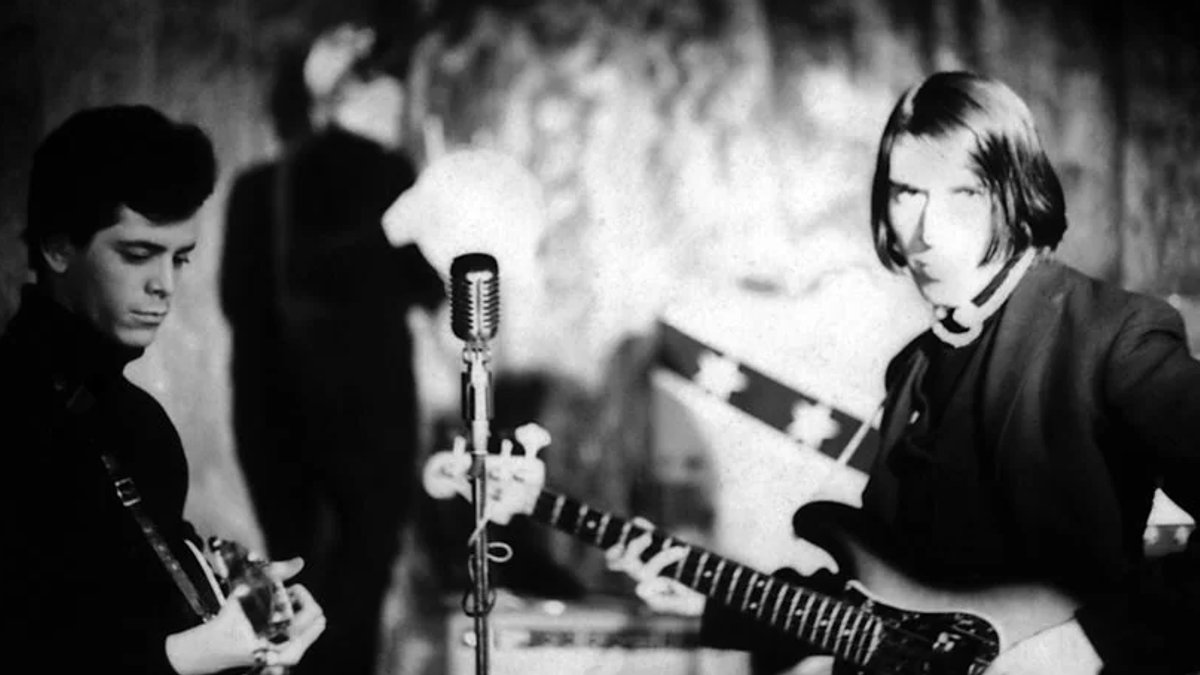
A major retrospective of Velvet Underground photography is currently on display at the Philharmonie de Paris, bringing together 49 images from a collection that survived against all odds. The exhibition, which ran from March to August 2016, coincided with the 50th anniversary of the band’s debut album and focuses on the work of photographer Adam Ritchie. The images document the Velvet Underground during their formative years, capturing the group as they transitioned from the gritty streets of New York City to the polished, factory-floor intensity of Andy Warhol’s world.
Chancing upon the scene
Adam Ritchie arrived in Manhattan’s Greenwich Village in 1962, initially taking up photography by chance. While he spent his nights working at The Bleeker Street Cinema, his days were spent documenting the city’s bohemian art, music, and fashion scenes for galleries, record labels, and magazines. His first brush with the Velvet Underground occurred on the set of Piero Heliczer’s film Venus in Furs in November 1965, a shoot prompted by a frantic phone call from filmmaker Barbara Rubin.
“A filmmaker friend, Barbara Rubin, phoned me one day and said, ‘we are filming now, you’ve got to come right away and hear this band,’” Ritchie recalls. “I was there in 15 minutes…” This quick reaction placed Ritchie in the right spot at the right time. His photographs reveal a band still finding its footing, shirtless and covered in “war paint” on the set of the movie, and later, just beginning to exude the distinct, dark-clad hauteur that would define their image.
Related: What Makes Sapphire Engagement Rings Popular in Glasgow?
Ritchie continued to document the group as they played venues like the Café Bizarre on West 3rd Street and the New York Film-Makers’ Cinematheque. These sets of photographs are noted for their intimacy and raw, vérité immediacy. As the band eventually became the house band for Warhol’s Exploding Plastic Inevitable, Ritchie was there to capture the aesthetic legacy that would be cemented during that multimedia extravaganza.
A photographer’s long road back
After his run with the Velvet Underground, Ritchie returned to London in 1966. He turned his lens toward the capital’s musical underground, capturing Pink Floyd performing at the hallucinatory UFO club. Unlike many who might have capitalized on their proximity to a rising phenomenon, Ritchie maintained a low profile. He went on to teach photography at the Central School of Art for seven years and later built houses in Wales and London.
Tragedy struck during this period, as nearly all of Ritchie’s photographs and negatives were destroyed without his knowledge. Fortunately, the physical damage of the destruction was not total. A battered paper carrier bag appeared years later, containing the Velvet Underground and Pink Floyd photos. The survival of these prints represents a small fraction of ten years’ professional work, yet they remain the defining images of two of the most iconic art-rock bands of the era.
Related: Round cut diamonds: The most popular diamond shape
The survival of this specific collection offers a rare glimpse into the spontaneous nature of 1960s underground culture. While many bands of the era are often remembered through glossier studio sessions, these unpolished moments from the streets and clubs preserve a grittier reality, ensuring the raw, chaotic energy of the scene isn’t lost to the polished veneer of history.
Preserving the moment
The exhibition at the Philharmonie de Paris highlights the transition period documented in Ritchie’s monochrome images. Viewers can see the band in various stages of development, moving from the shadows of underground cinema into the tin-foil glare of the Factory. The collection serves as a visual record of a turbulent time in music history.
It is impossible to imagine popular music iconography’s subsequent half-century-long evolution without them. The surviving images ensure that the public retains a visceral, unpolished memory of a scene that defined underground culture, rather than a curated, polished museum piece. The exhibition stands as a sign to the importance of preserving the chaotic, unscripted moments that often define an era more vividly than the polished performances that followed.


